




Rotary Cooler
Product Overview
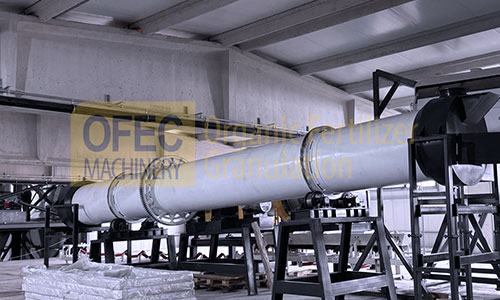
In organic fertilizer production, granules discharged from the rotary dryer typically have a high outlet temperature. If sent directly to packaging, the residual heat can damage packaging materials and cause moisture regain and caking, compromising product quality and storage stability. Therefore, hot organic fertilizer granules must be cooled before packaging, storage, and transport to minimize attrition and dust generation during subsequent handling and shipping.
Equipment Components
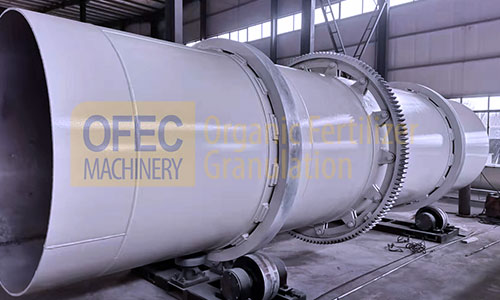
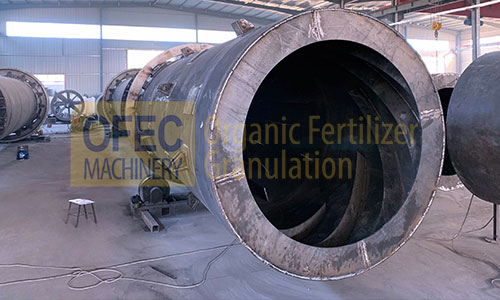
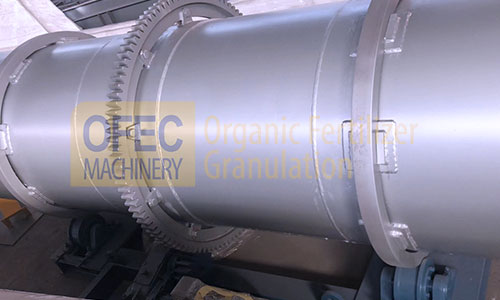
A – Cylinder (Drum): The core working part where cooling takes place
B – Feeding Device: Feeds hot material into the drum
C – Discharging Device: Discharges cooled material
D – Support Wheel Assembly: Supports the rotating drum
E – Transmission: Drives the drum rotation
F – Protecting Cover: Safety protection
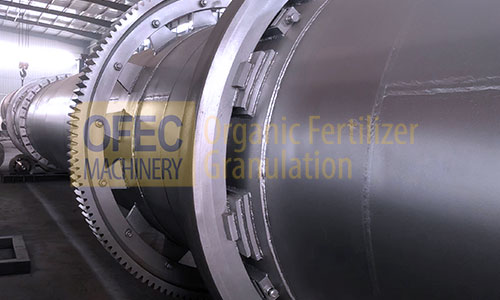
G – Rolling Ring (Tyre): Works with support wheels
I – Pinion: Drive component
J – Exhaust Outlet: Discharges hot exhaust air
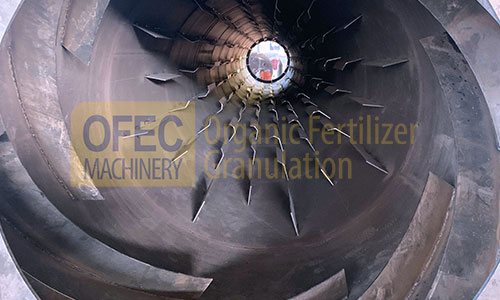
K – Lifting Plate: Lifts material to increase heat exchange
L – Spiral Blade: Guides material flow
● Cylinder (Drum): The core working part where cooling takes place
● Feeding Device: Feeds hot material into the drum
● Discharging Device: Discharges cooled material
● Support Roller Assembly: Supports the rotating drum
● Transmission: Drives the drum rotation
● Protecting Cover: Safety protection
● Rolling Ring (Tyre): Works with support wheels
● Big Gear: Drive component
● Pinion: Drive component
● Exhaust Outlet: Discharges hot exhaust air
● Lifting Plate: Lifts material to increase heat exchange
● Spiral Blade: Guides material flow
Working Principle
Counter-Current Cooling Design: Hot material enters the drum from the feed end, while cooling air is introduced from the discharge end, flowing in the opposite direction. This counter-current configuration provides the largest temperature difference and achieves maximum heat exchange efficiency – the most important feature that distinguishes the cooler from the dryer, resulting in the lowest discharge temperature and highest cooling efficiency.
As the drum rotates, internal lifting flights pick up the material and shower it through the cooling air stream, forming a falling “curtain” that ensures thorough contact between the material and the cooling air. Heat is carried away by the airflow, rapidly reducing the material temperature. The cooled material moves gradually towards the discharge end under gravity and exits the drum, completing the cooling process.
Features and Benefits
High Cooling Efficiency
Rugged Construction
Proven Reliability
Easy Maintenance
Efficient Sealing
Strong Adaptability
Industry Solution for Organic Fertilizer Cooling
Cooling is a critical step bridging upstream and downstream processes in organic fertilizer production, directly affecting final product quality and storage stability.
Typical Process Flow
Organic fertilizer granulation → Drying → Rotary cooling → Screening → Coating (optional) → Packaging
Solution Advantages
● Effectively reduces granule temperature, preventing damage to packaging materials from residual heat
● Rapid cooling reduces crystal bridging between granules, significantly lowering caking risks
● Cooling enhances mechanical strength of granules, reducing attrition and dust during handling and transport
● Prevents moisture regain, keeping the product dry for long-term storage
● Stable discharge temperature creates optimal conditions for subsequent screening, coating, and packaging
Resources
The “Last Line of Defense” After Drying – How Many Organic Fertilizer Plants Are Overlooking It?
On an organic fertilizer production line, the dryer is the