




The OFEC rotary drum cooler product page lists its core parameters: drum diameter 0.8–4.6 meters, capacity 1–200 TPH, counter-current air cooling design. But the question worth exploring is not “how low can it cool the temperature?” but rather “without proper cooling after drying, all the effort invested in earlier stages may be wasted.”
1. The Overlooked “Last Mile”: Discharge Temperature of 90°C – What Happens If You Package Directly?
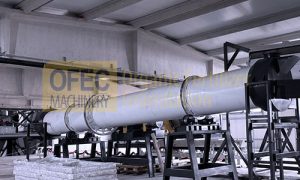
Granulation → Drying → Cooling → Screening → Coating → Packaging – this is the standard process flow for organic fertilizer production. However, many plants in practice shorten or even skip the cooling stage, reasoning that “the pellets look dry enough – they should be ready for packaging.”
This is a critical misconception.
Pellets leaving the dryer typically have a temperature of 90–100°C or higher. If packaged directly:
- Packaging material damage: High temperatures can soften or melt the inner surface of plastic bags, resulting in weak seals and package breakage
- Moisture regain: As hot pellets cool inside sealed bags, internal moisture migrates outward, condenses on the inner bag surface, and is reabsorbed by the pellets – pellets that were just dried become wet again
- Caking and spoilage: Moisture + residual heat creates a breeding ground for microbial activity. Pellets cake, mold, and the entire batch becomes unsaleable
Cooling is not optional – it’s mandatory. A properly designed cooler protects the investment made in all preceding process stages.
2. Counter-Current Cooling: A Simple Principle with Maximum Heat Exchange Efficiency
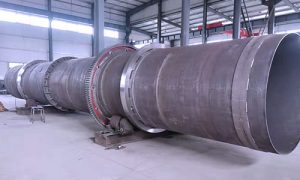
The OFEC rotary drum cooler employs counter-current air cooling – hot material enters from the feed end while ambient air enters from the discharge end, flowing in opposite directions.
Why is counter-current more efficient than co-current?
In a co-current design, hot material encounters ambient air at the feed end with maximum temperature difference – but as material moves forward, the air has already been heated, the temperature difference diminishes, and cooling efficiency declines. Counter-current design is the opposite – as material moves forward, it encounters progressively cooler air, maintaining the maximum temperature driving force throughout.
This means: with the same cooling air volume, counter-current design removes 15%–25% more heat than co-current design.
For a 50,000 t/y line, this efficiency difference directly determines:
- Cooler size (counter-current achieves the same cooling effect with smaller equipment)
- Cooling air power consumption (counter-current requires less air volume)
- Discharge temperature stability (counter-current delivers lower, more uniform discharge temperatures)
3. Cooling Is Not Just About “Lowering Temperature” – It’s Also About “Strengthening”

The OFEC product page notes that the cooling process “not only prevents caking but also enhances pellet strength.” This easily overlooked detail holds significant value.
After high-temperature dehydration in the dryer, pellets have uneven thermal stress distribution and micro-cracks in their internal structure. During cooling, pellets tumble and rub against each other inside the drum, gradually releasing thermal stress and stabilizing the pellet structure.
Direct benefits of strength enhancement:
- Reduced breakage during screening: Cooled pellets are more durable
- Less dust during packaging and transport: Denser surfaces resist abrasion
- Better storage stability: Pellets maintain integrity during long-term stacking
4. The “Hidden Costs” of Inadequate Cooling: Invisible on the Surface, Clearly Visible in the Books
The consequences of inadequate cooling often don’t appear on the day of production – they emerge a week later, a month later, or after the product reaches the customer.
| Consequence of Inadequate Cooling | Time of Manifestation | Cost Type |
| Condensation inside bags, moisture regain | 24–48 hours after packaging | Rework cost, packaging material waste |
| Caking inside bags | 1–2 weeks of storage | Product downgrade, customer complaints |
| Mold and spoilage | 2–4 weeks of storage | Complete batch write-off |
| Breakage and powdering during transport | Customer receipt | Brand reputation damage |
A single properly designed cooler prevents all of these costs. The investment in a cooler is often a fraction of the cost of a single product write-off.
5. The Cooler Is the Dryer’s “Partner” – Not a “Subordinate”
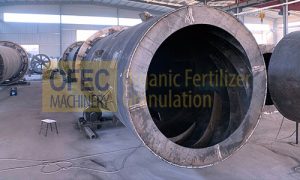
The dryer and cooler are structurally similar – both are inclined horizontal rotating cylinders. But their roles are fundamentally different:
- Dryer: Inputs energy, removes moisture
- Cooler: Outputs energy, stabilizes structure
The dryer “gives” the pellet its form; the cooler “locks” that form in place. Without the cooler, the dryer’s work gradually reverses inside the bag – moisture regain, caking, powdering – step by step back to square one.