




Wheel-Type Compost Turner
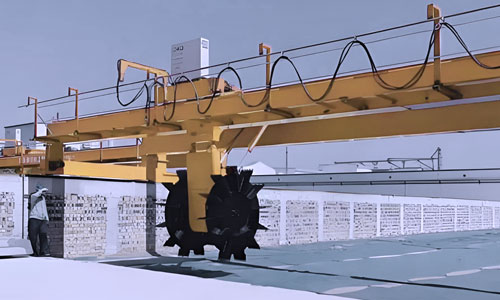
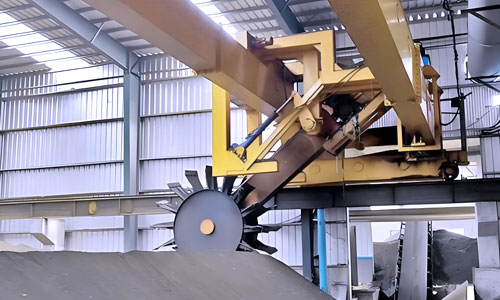
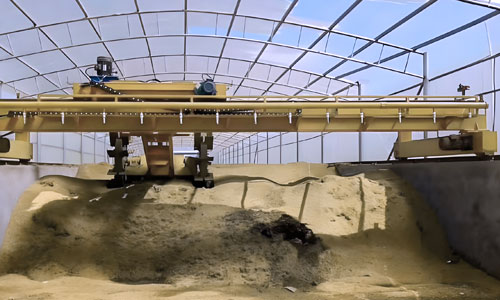
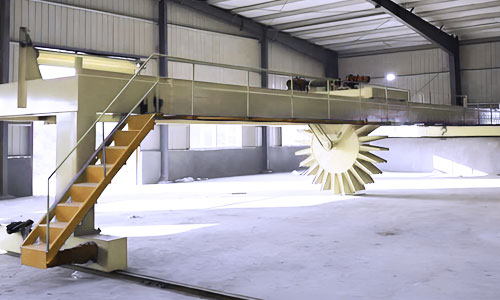
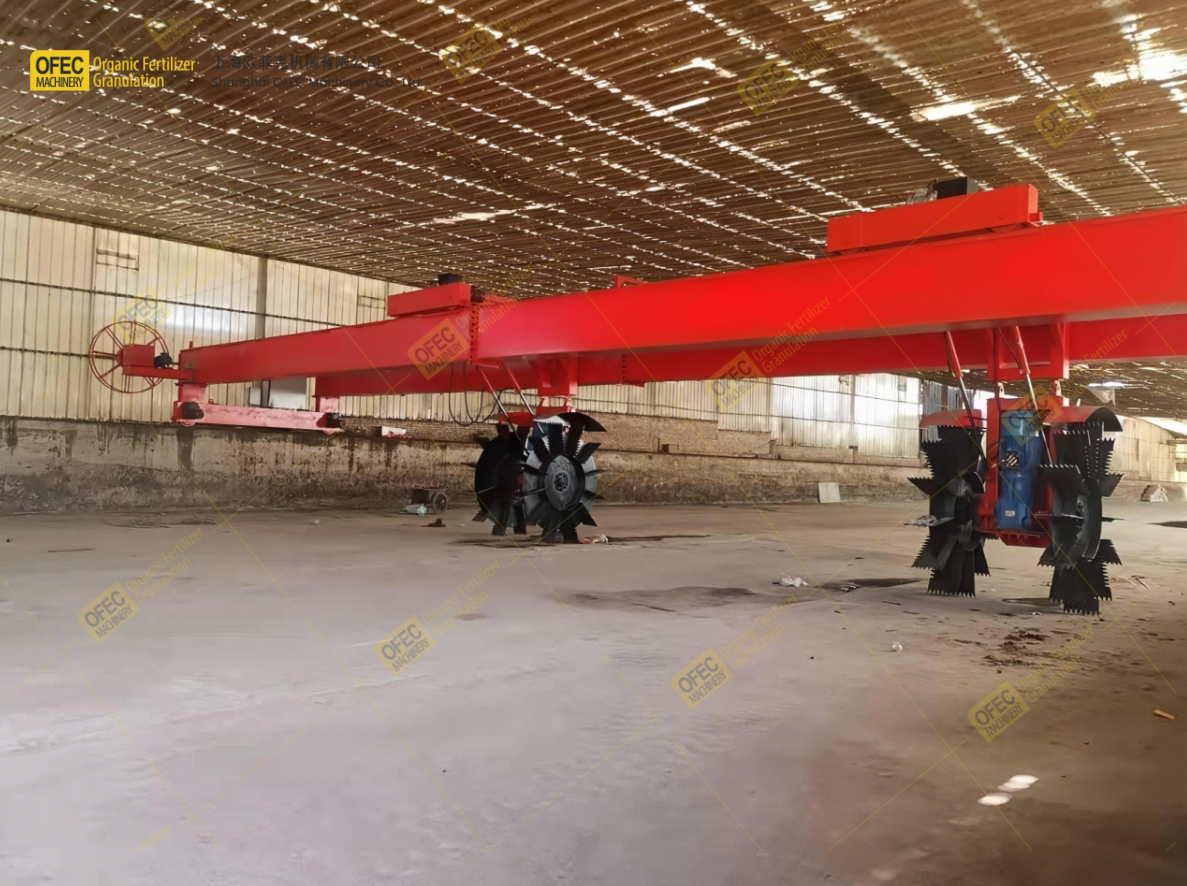
The OFEC Wheel-Type Compost Turner is a large-span, high-depth fermentation unit positioned at the front end of organic fertilizer production lines. It is designed for large-scale aerobic fermentation and turning of various organic wastes, including livestock manure, sludge, sugar filter mud, filter cake, straw, and sawdust. It is widely used in organic fertilizer plants, compound fertilizer plants, sludge treatment facilities, nursery gardens, and Agaricus blazei (Brazilian mushroom) plantations.
Product Overview
The wheel-type compost turner is the ideal choice for large-span, high-depth composting operations. This equipment is extensively applied in organic fertilizer plants, compound fertilizer plants, sludge treatment facilities, nursery gardens, and Agaricus blazei plantations for fermentation and dewatering operations. It is a core piece of equipment for large-scale aerobic fermentation.
The OFEC wheel-type compost turner operates smoothly and is highly maneuverable, offering deep turning capability and strong processing capacity – making it ideal for continuous operation in large-scale composting facilities.
Equipment Components
The wheel-type compost turner mainly consists of the following components:
● Frame: Supports the entire equipment
● Turning Device: Core turning component that turns and mixes the material
● Hydraulic System: Controls turning depth and lifting
● Drive System: Drives the turning device
● Steering Control System: Controls equipment movement and steering
● Power System: Supplies power for overall machine operation
Working Principle
The wheel-type compost turner is built around a large rotating disc as its core working component, delivering highly efficient turning through the following sequence:
- Straddling and Travel – The machine straddles the windrow and moves forward along the pile.
- Disc Turning and Forced Agitation – The rotating disc, equipped with blades or teeth, penetrates the pile, lifting, breaking, and throwing material upward.
- Aeration and Mixing – As the material is thrown, it disperses in the air, maximizing oxygen contact to fuel aerobic fermentation.
- Relocation and Re‑piling – The turned material falls behind the machine, naturally forming a new, loose windrow, effectively merging turning and relocating in one pass.
The entire process integrates turning, crushing, aeration, and relocation simultaneously – improving composting efficiency and oxygen distribution across large‑scale windrow operations.
Applicable Materials
Material Category | Typical Examples |
Livestock & Poultry Manure | Pig manure, chicken manure, cow manure, sheep manure, etc. |
Agricultural Straw | Corn straw, wheat straw, rice straw, sawdust, etc. |
Organic Wastes | Municipal sludge, sugar filter mud, distiller’s grains, filter cake, food waste, etc. |
Features and Benefits
Large‑Span Design
Deep Turning Capability
High Processing Capacity
Smooth Operation
Stable and reliable performance
Strong Adaptability
High Production Efficiency
Resources
The “Productivity Engine” for Large-Scale Composting Facilities – How One Machine Supports a 100,000-Ton Annual Production Line
In organic fertilizer production, composting is the “first checkpoint” of