




Pulse Dust Collector
The OFEC Pulse Dust Collector is a critical environmental protection device in organic fertiliser production lines. It is designed to capture and remove dust and particulates generated during raw material crushing, screening, drying, cooling, granulation, and packaging – ensuring that exhaust emissions comply with national environmental standards. Featuring advanced pulse‑jet cleaning technology, this equipment offers high dust collection efficiency, low energy consumption, stable operation, and easy maintenance. It has been successfully deployed in numerous organic fertiliser plants.
Product Overview
During organic fertiliser production – from raw material handling through to finished product packaging – every process stage generates substantial amounts of dust. This dust not only pollutes the surrounding environment but also results in the loss of valuable raw materials, thereby increasing production costs. Installing a high‑efficiency, reliable dust collection system is therefore both a mandatory requirement for environmental compliance and a strategic measure to reduce costs, improve operational efficiency, and elevate clean production standards.
The OFEC Pulse Dust Collector – also referred to as a pulse‑jet baghouse or pulse‑injection dust collector – is a high‑efficiency, energy‑saving air purification system specifically engineered for organic fertiliser production environments.
Working Principle
The pulse dust collector operates on the principle of pulse‑jet cleaning technology. Dust‑laden air enters the collector housing through the inlet, is evenly distributed via guide plates, and then passes through the filter bags. Dust particles are captured on the outer surface of the bags, while purified clean air rises through the inside of the bags and exits through the outlet.
As filtration continues, the dust layer on the bag surface thickens, increasing the equipment’s resistance. At this point, the intelligent control system (PLC or timer) automatically triggers a pulse‑cleaning cycle: compressed air from the air reservoir is instantly released through pulse valves, and rushes at high speed through blow pipes into the filter bags via small nozzles. This creates a strong shockwave that causes the bags to expand and flex rapidly, dislodging the accumulated dust from the outer surfaces. The dislodged dust falls into the hopper below and is discharged by a rotary valve for disposal or recovery. The cleaning process occurs row‑by‑row in sequence, so it does not interrupt continuous dust collection.
Through this regular, automatic cleaning cycle, the equipment maintains low operating resistance and high collection efficiency, ensuring stable airflow and extending filter bag service life.
Features and Benefits
High Collection Efficiency
Automatic Cleaning with Intelligent Control
Energy‑Efficient and Low‑Consumption
Compact Footprint
Easy Maintenance
Dust Recovery and Reuse
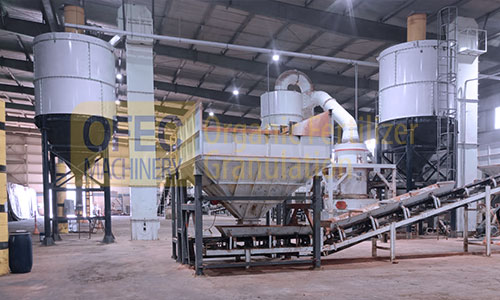
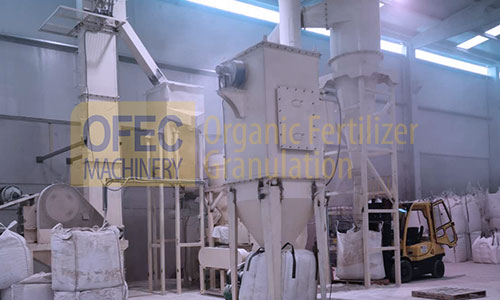
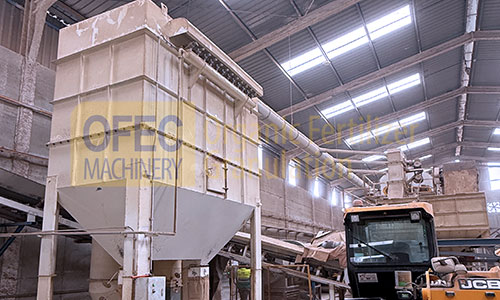
Industry Solution for Organic Fertilizer Pulse Dust Collector
A well‑designed dust collection system is essential in organic fertiliser production – for compliance, workplace safety, and material recovery. The OFEC Pulse Dust Collector can be installed at all major dust points: crushing, screening, granulation, drying, cooling, secondary screening, and packaging. Enclosed hoods and ductwork channel dust to the collector for centralised treatment.
Key Benefits:
● Compliance – Maintains outlet emissions below regulatory limits (e.g., ≤30 mg/Nm³), avoiding fines.
● Nutrient Recovery – Collected dust is rich in organic matter and NPK, directly recycled into batching or granulation to cut raw material costs.
● Safe & Clean – Reduces airborne organic dust, protecting workers and improving the plant environment.
● Equipment Protection – Prevents fan and duct fouling, extending system lifespan.
● Flexible – Single or multi‑unit configurations, with optional cyclone pre‑separator, adapt to plant sizes from 10,000 to 100,000 t/yr.
Resources
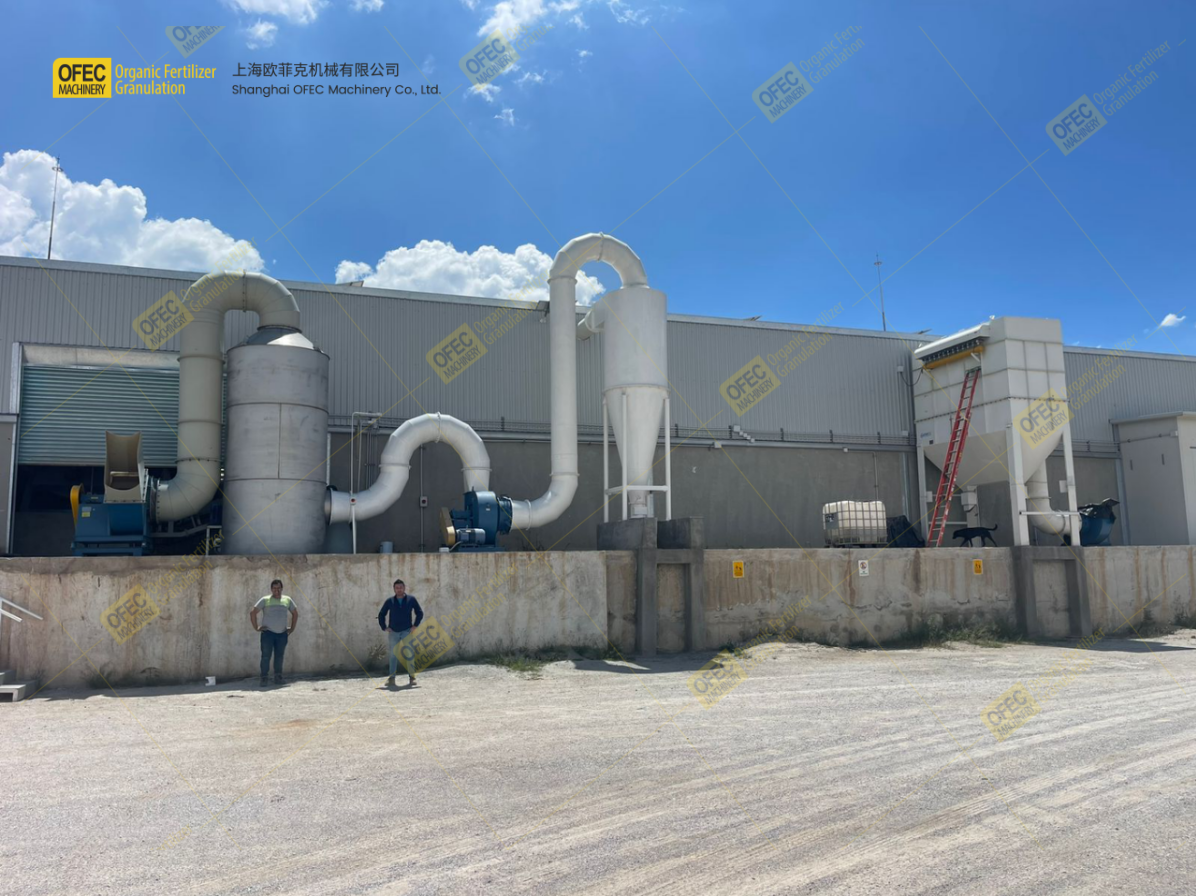
The Organic Fertilizer Plant’s “Invisible Profit Recovery Station”
On an organic fertilizer production line, crushing, screening, granulation, drying,