




Crusher
Product Overview
In organic fertilizer granulation production, raw material particle size directly affects mixing uniformity, reaction speed, and granulation performance. The crusher is a commonly used piece of equipment for size reduction of fertilizer raw materials, used to crush fermented organic materials and oversized return particles down to the optimal fineness for granulation.
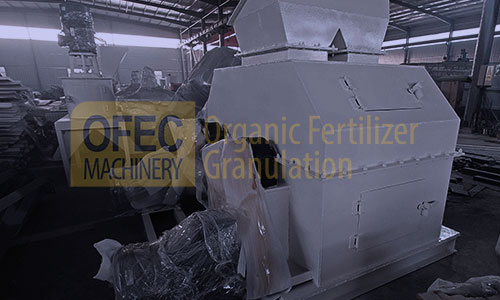
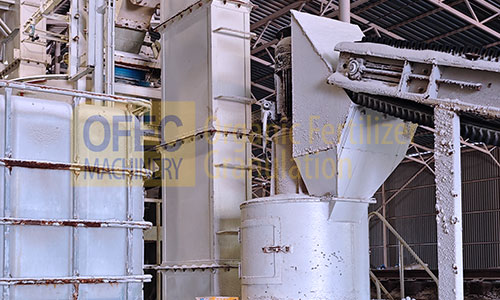
OFEC offers two structural types – the vertical chain crusher and the horizontal chain crusher – designed to flexibly adapt to different organic material characteristics and production line layout requirements.
Equipment Components
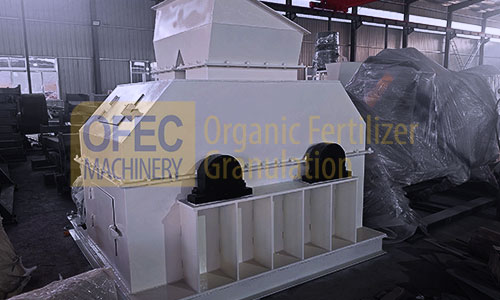
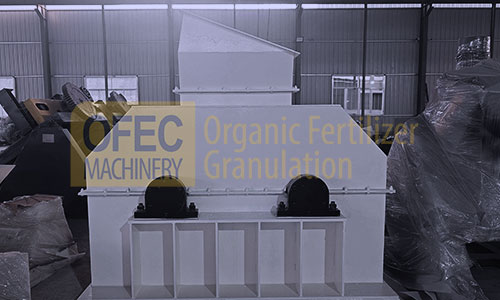
Horizontal Chain Crusher Components
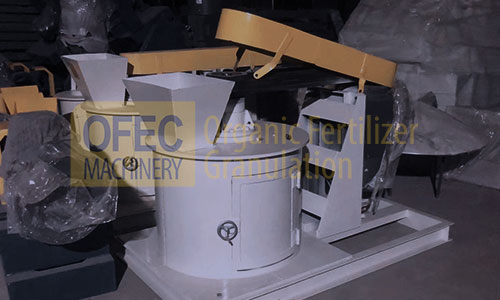
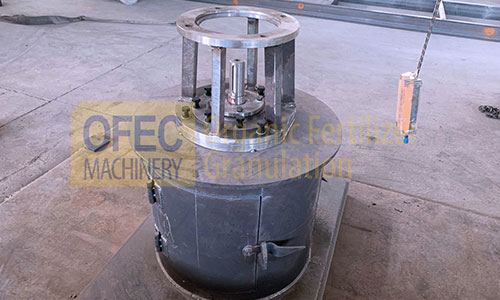
Vertical Chain Crusher Components
Working Principle
Vertical Chain Crusher features a single-rotor structure. Material enters the crushing chamber through the feed inlet at the top of the housing. The rotor is equipped with 2–5 chain discs, each carrying multiple chains (which can be replaced with blades depending on material characteristics). Chains on adjacent discs are arranged in a staggered pattern. Material is impacted by the rapidly rotating chains, then collides with the housing walls and other particles, resulting in effective size reduction. The crushed material is discharged from the bottom outlet.
Horizontal Chain Crusher features a dual-rotor structure, consisting of two horizontally arranged parallel rotors, each equipped with identical sets of chain assemblies. Material enters through the top feed inlet and is struck by two sets of high-speed rotating chains. The particles are propelled at high tangential velocity and impact each other within the housing, achieving thorough crushing before being discharged from the bottom outlet.
Applicable Materials
Material Category | Typical Examples |
Fermented Organic Materials | Fermented livestock manure (pig, chicken, cow, etc.), biogas residue, municipal sludge, etc. |
Organic Wastes | Straw, peat, humic acid, distiller’s grains, sugar filter mud, etc. |
Return Materials | Oversized pellets from granulation, lumpy return materials from screening, etc. |
Material Category
Typical Examples
Industry Solution for Organic Fertilizer Crusher
Crushing is a key step in the organic fertilizer production line. Proper particle size reduction not only improves mixing uniformity and accelerates reactions but also significantly enhances granulation performance and pellet formation rate.
Typical Process Flow
Fermented organic materials → Crushing → Batching & mixing → Granulation → Drying → Cooling → Screening → Packaging
Solution Advantages
● Chains and blades are interchangeable to flexibly accommodate different organic materials with varying moisture and fiber content
● Horizontal model features a dual-rotor design that resists clogging when handling high-moisture materials, ensuring continuous operation
● Uniform output particle size provides an ideal raw material foundation for downstream granulation
● Compact structure with flexible installation – suitable for new plants or retrofitting existing lines
● Easy maintenance; quick replacement of wear parts minimizes downtime
Features and Benefits
Flexible Model Selection
Strong Adaptability
Easy Maintenance
Stable Operation
Uniform Output Fineness
Automatic Batching vs. Manual Batching
Comparison Aspect | Vertical Chain Crusher | Horizontal Chain Crusher |
Rotor Structure | Single rotor | Dual rotor |
Clogging Tendency | Prone to clogging with high-moisture materials | Resists clogging, suitable for high-moisture materials |
Crushing Efficiency | Medium | Higher – dual rotor provides double impact force |
Power Consumption | Lower | Higher (dual motors) |
Suitable Materials | Lower moisture, lower fiber content | Higher moisture, higher fiber content |
Space Requirement | Smaller footprint | Larger footprint |
Suitable Materials
Lower moisture, lower fiber content
Resources
The Most Underestimated “Efficiency Engine” on the Organic Fertilizer Production Line
On an organic fertilizer production line, the granulator is the