




1. Screening Is Not Just “Separating” – It’s “Accounting”
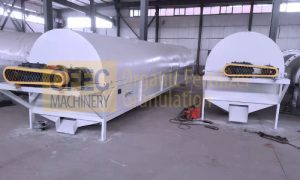
The screener’s task appears simple: separate pellets into finished product, fines (returns), and oversize (to be crushed and returned). But this “simple” grading action directly determines three cost lines:
The First Cost Line: Finished Product Rate. The higher the screening precision, the greater the proportion of qualified pellets entering the packaging stage. Screen clogging or imprecise grading can cause large quantities of qualified pellets to be misclassified as returns – every ton misclassified is a ton of lost revenue.
The Second Cost Line: Return Material Cost. Fines and oversize returned to the granulation system for reprocessing must undergo the entire process again – crushing, mixing, granulation, drying, cooling – consuming additional energy and labor with each cycle.
The Third Cost Line: Product Premium. Uniformly sized products command higher prices in the end-user market. Imprecise grading leading to inconsistent product specifications directly reduces your brand’s premium pricing power.
2. Recycle Rate: A 5% Difference Could Mean a Million-Dollar Profit Gap
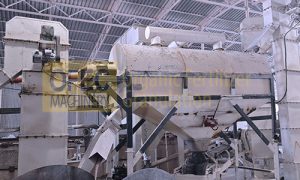
In organic fertilizer production, every 5% reduction in recycle rate increases effective capacity by 5% – without any additional equipment investment, without burning an extra ton of fuel – pure profit increase.
Using a 50,000 t/y organic fertilizer plant as an example:
- Reducing recycle rate from 20% to 15% means eliminating 2,500 tons of material recirculation annually
- That 2,500 tons no longer requires re-crushing, re-granulation, or re-drying – directly saving the corresponding energy and labor costs
- Based on average processing costs, recycle rate reduction alone can save tens of thousands of dollars annually
The screener’s precision directly determines the recycle rate. A screener equipped with a cleaning brush device and precise screen openings keeps the recycle rate at the lowest possible level.
3. Screen Clogging: The Biggest “Invisible Killer”
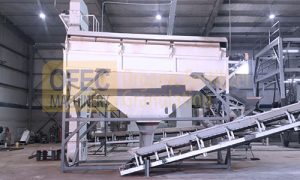
The most common screener failure is screen clogging. Organic materials are moist and sticky – fines and particles adhere to screen openings, progressively reducing effective screening area.
The cascade effect of screen clogging:
- Reduced effective screening area → Decreased throughput → Upstream material accumulation → Entire line forced to slow down
- Reduced screening precision → Off-spec pellets mixed into finished product → Product quality fluctuations → Customer complaints
- Clogging clean-up → Frequent stoppages → Reduced productive time
OFEC’s cleaning brush device is a precise response to this “high-frequency failure.” The brush continuously cleans the screen surface, maintaining screening efficiency without interrupting production.
4. Screener Selection: Not “Bigger Is Better” – It’s “Better Match Is Better”
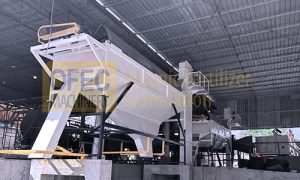
Screener selection requires consideration of three core variables:
1. Capacity matching. The screener’s throughput must match both upstream dryer output and downstream packaging capacity. Oversized equipment results in idle capacity and wasted investment; undersized equipment becomes a “bottleneck” for the entire line.
2. Screen opening size. Organic fertilizer pellets typically range from 1–6 mm. Screen openings must be precisely customized based on target product specifications. One screen cannot cover all product specifications – rapid screen change capability is essential for production flexibility.
3. Material characteristics. High-moisture, high-viscosity organic materials demand higher performance from screen materials and cleaning devices. Stainless steel screens offer corrosion resistance and longer service life – the recommended choice for processing moist organic materials.
5. The Screener Is the Production Line’s “Quality Control Point”
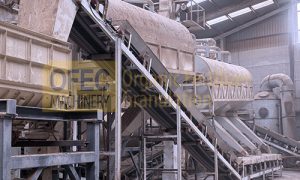
In Total Quality Management, the screener is a classic “quality control point“ – its job is not to “produce” something, but to “judge” what meets specifications and what does not.
- Fines (undersize): Returned to the granulation system for re-granulation
- Finished product (mid-size): Proceeds to coating or directly to packaging
- Oversize (oversize): Crushed and returned to the granulation system
The screener’s judgment accuracy determines the entire line’s product quality compliance rate. Judge incorrectly – finished product misclassified as returns loses revenue; off-spec product mixed into finished product loses brand reputation.