




1. Disc Granulator: The “Elder Statesman” with Enduring Vitality
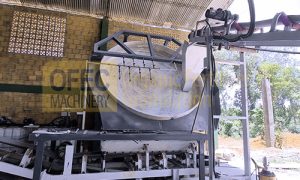
As the “veteran” of organic fertilizer granulation equipment, the disc granulator’s evolutionary history parallels the very development of organic fertilizer granulation technology itself.
Generation 1.0 (Manual Operation): In the early days, the organic fertilizer industry was dominated by small-scale, workshop-style production. The first-generation disc granulator was essentially a “simple rotating disc with manual assistance.” With disc diameters typically below 1 meter, they processed only 0.1–0.2 tons per hour, achieving pelletization rates below 60%, and required 2–3 operators per machine. Yet this rudimentary equipment broke through the technical barrier of converting powder into pellets.
Generation 2.0 (Semi-Automation): The introduction of electric motors and reducers automated disc rotation. Disc diameters expanded to 1.5–2.5 meters, capacity rose to 0.5–1.5 tons per hour, and pelletization rates improved to 75%–85%. This generation completely eliminated the limitations of fully manual operation.
Generation 3.0 (Automation): Material upgrades to high-strength fiberglass or wear-resistant alloy liners extended service life to 8–10 years for large models. The adoption of integral arc disc design pushed pelletization rates above 90%, with some models exceeding 93%. Features such as non-powered combination scrapers for automatic edge and bottom cleaning, and variable frequency speed control systems, became standard.
By 2025, the global disc fertilizer granulator market is estimated at USD 1.94 billion, with projections reaching USD 3.0 billion by 2035.
2. Drum Granulator: From “Steel Behemoth” to Market Share Leader
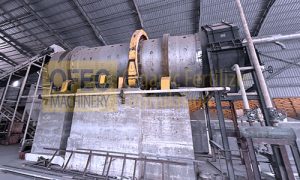
When the first drum granulator entered production, it sent shockwaves through the industry. This “rotating steel behemoth,” with its ingenious inclined design and internal structure, achieved uniform pellet formation at scale.
The drum granulator is built for large-scale production, employing a wet agglomeration process where materials are moistened with water or steam within the rotating drum to form spherical pellets. Unlike the gradual evolution of disc granulation, drum granulation was engineered from the outset for industrial-scale mass production.
According to market research firm Fact.MR, by 2026, drum granulators are projected to account for 52% of the organic fertilizer granulator market share. Within the equipment type segment, drum granulators are expected to register the highest growth rate during the forecast period.
3. Roller Granulator: The Dry Process “Energy Revolution”
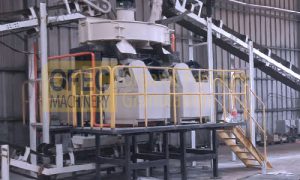
If disc and drum granulation represent the two main routes of wet granulation, roller granulation opened an entirely different path: dry granulation.
Roller granulators compress powdered materials into dense pellets through high-pressure roll compaction – no water, no steam, no drying required. The greatest advantage of this technological approach is substantial energy reduction – overall energy consumption can be 30%–50% lower than wet granulation processes.
In the production of bio-organic fertilizers and heat-sensitive materials, the ambient-temperature forming process of roller granulation offers an irreplaceable advantage – microbial survival rates exceeding 90%. In recent years, with the rapid expansion of the bio-organic fertilizer market, demand for roller granulators has continued to grow steadily.
4. Three Pillars of a Multi-Billion Dollar Industry
Each of the three granulation technologies has distinct strengths, and each occupies a clear niche in the global organic fertilizer granulator market:
| Technology | Core Advantage | Typical Application | Market Position |
| Disc Granulator | Flexible, low cost, intuitive operation | Small to medium-scale projects, frequent formula changes | Historic, stable demand |
| Drum Granulator | High capacity, continuous operation, high pellet strength | Large-scale production | Market share leader (52%) |
| Roller Granulator | No drying, energy-efficient, preserves heat-sensitive components | Bio-organic fertilizer, energy-constrained regions | Rapidly growing |
The growth drivers for the global organic fertilizer granulator market are multi-faceted: expansion of organic farming, rising awareness of soil health, strengthening environmental regulations, and policy support for waste-to-resource initiatives.
Among these, the Asia-Pacific region is expected to be the fastest-growing regional market, while animal manure processing represents the fastest-growing application segment.
Conclusion
From the disc granulator born during the fertilizer industry revolution of the mid-20th century, to the drum granulator that now commands half the market, to the roller granulator leading the energy-efficiency trend – every leap forward in organic fertilizer granulation technology has been driven by the industry’s relentless pursuit of higher efficiency, lower energy consumption, and better quality.
In this market approaching USD 1.3 billion, the three technologies are not simply substitutes for one another. Each occupies its own optimal position. Understanding their respective development paths and application boundaries is the key to making truly informed equipment selection decisions.