




So what is the optimal turning frequency?
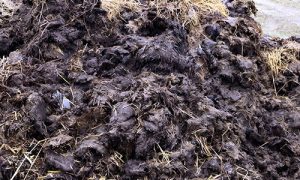
The academic consensus is remarkably consistent. Studies show that during the active composting phase, turning every 12 hours with pile oxygen concentration maintained at 10% represents the optimal condition. Under these conditions, aerobic microbial activity peaks, and organic matter decomposition proceeds at maximum speed.
But this is the “theoretical optimum” under laboratory conditions. In real‑world production, turning every 12 hours means twice daily – for large‑scale composting facilities, this requires substantial equipment investment and operating costs.
In practice, composting facilities typically turn far less frequently than the theoretical optimum.
A study of windrow composting operations found that in practice, weekly turning is already considered a respectable frequency. The study’s recommended best practice was: twice weekly for the first two weeks, then once weekly for the next two weeks. Even this represents only one‑quarter of the theoretical optimum frequency.
What is the cost of insufficient turning frequency?
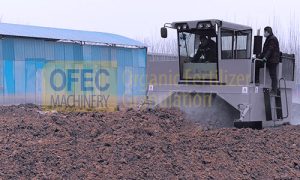
Oxygen concentration inside the pile drops sharply. Research data shows that in inadequately turned windrows, internal oxygen concentration remains at 1%–4% for extended periods. Yet the oxygen concentration required for effective aerobic microbial decomposition is 10% or higher. This gap directly determines fermentation efficiency.
The cascade effects of oxygen deficiency:
- Pile temperature fails to rise. The heat generated by aerobic fermentation is insufficient to maintain the 55–70°C thermophilic phase – pathogens and weed seeds are not effectively eliminated
- Fermentation cycle lengthens. Organic matter decomposition slows – traditional composting requires 60+ days to achieve maturity
- Product quality becomes inconsistent. “Anaerobic dead zones” develop within the pile – material at different locations shows vastly different maturity levels
- Odor problems intensify. Anaerobic fermentation produces hydrogen sulfide, ammonia, and other malodorous gases – the primary source of complaints from nearby communities
The root cause is often not “unwillingness to turn,” but “inability to turn.”
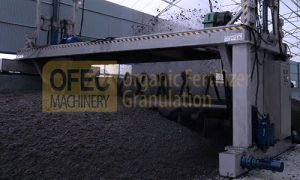
Manual turning is labor‑intensive and inefficient. Loader‑based turning has limited depth (typically less than 1 meter) – the bottom of the pile remains an “anaerobic dead zone.” Large‑scale composting facilities without specialized turning equipment, even when aware of the need for more frequent turning, cannot achieve it within reasonable time and cost constraints.
Turning depth is the critical variable that determines whether oxygen can penetrate the entire pile.
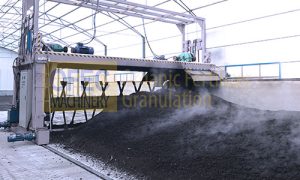
Equipment capable of reaching a turning depth of 1.8 meters or deeper can completely invert the pile from surface to bottom – ensuring uniform temperature and oxygen distribution throughout. In contrast, equipment with a turning depth below 1.2 meters leaves the bottom of the pile as a permanent “unturned” dead zone.
For large‑scale composting facilities, the equipment’s working width is equally critical. Every additional meter of working width increases the material volume covered per pass proportionally. At the same travel speed, daily processing capacity increases linearly – which is why large‑scale composting operations choose equipment with a working width of 4 meters or more.
Insufficient turning frequency is not a “motivation problem” – it’s an “equipment capability problem.” When equipment can complete deeper, wider turns in less time, “twice daily” ceases to be a theoretical lab value and becomes an achievable production standard.