




1. Downtime Cost: The Value of Continuous Operation Is Far Greater Than You Think
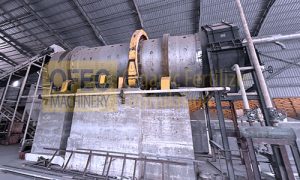
For small to medium-scale projects with an annual output of 10,000–20,000 tons, a few hours of daily downtime for cleaning and maintenance may be manageable. But when capacity reaches 50,000, 100,000 tons or more, every unplanned stoppage directly erodes profitability.
The drum granulator is engineered from the ground up for 24/7 continuous operation. With drum diameters ranging from 0.8 to 4.5 meters and processing capacities from 1 to 200 TPH, it is built to withstand prolonged, high-load operation without compromising pellet quality. What sets it apart is its self-cleaning drum wall design – flexible rubber strips lining the drum interior, combined with a breathing hole structure. As the drum rotates to the top, the rubber strips sag under their own weight and that of adhering material, causing accumulated deposits to crack and fall off. This self-cleaning mechanism, which eliminates the need for traditional scrapers, means production lines can run longer without interruption, reducing capacity losses caused by cleaning-related downtime.
Hidden Cost Comparison:
- Equipment without self-cleaning design: Requires 30–60 minutes of downtime per shift for wall cleaning; a 50,000 t/y line loses approximately 500–1,000 tons of capacity annually
- Drum granulator: Self-cleaning design drastically reduces manual cleaning frequency, delivering higher effective capacity utilization
2. Recycling Cost: Every Ton of Returns Eats into Your Profit Margin
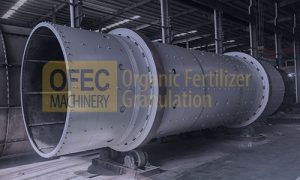
During the granulation process, off-spec pellets must be returned to the system for reprocessing. This “recycle stream” not only wastes the energy and labor invested in upstream stages but also consumes valuable granulation capacity.
The drum granulator employs a wet agglomeration process, where materials agglomerate through the combined actions of rolling, tumbling, and binder addition within the drum. With a pelletization rate consistently reaching 85%–95%, the recycle rate is significantly lower than the industry average. This means that a higher proportion of every ton of raw material fed into the system is directly converted into qualified product, rather than circulating through the system repeatedly.
Hidden Cost Comparison:
- Every 5% reduction in recycle rate: A 50,000 t/y line reduces returns by 2,500 tons annually, saving corresponding energy consumption in crushing, conveying, and re-granulation
- Drum granulator: 85%–95% pelletization rate minimizes recycle volume, maximizing raw material utilization
3. Energy Cost: The Fuel Bill Behind the Drying Stage
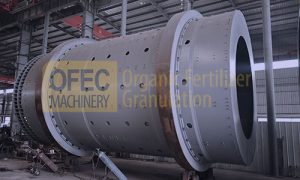
In organic fertilizer granulation, drying is the most energy-intensive stage, accounting for 60%–70% of total line energy consumption. Any process improvement that reduces the moisture content of material entering the dryer directly reflects on the fuel bill.
The drum granulator employs a thermal granulation process – steam is introduced into the drum to elevate material temperature, allowing water-soluble salts to dissolve more readily at lower moisture levels. This means pellets exiting the granulator have lower moisture content, requiring less heat input in the downstream dryer.
Hidden Cost Comparison:
- Thermal vs. ambient granulation: Every 10°C increase in material temperature reduces drying energy consumption by approximately 5%–8%
- Drum granulator: Steam granulation lowers pellet discharge moisture, significantly reducing fuel consumption in the drying stage
4. Maintenance Cost: A Machine That “Doesn’t Demand Constant Attention”
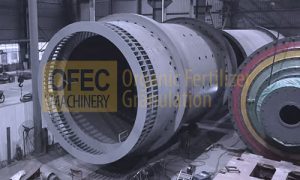
The drum granulator’s structural design prioritizes low maintenance and long service life. Drum materials can be selected from carbon steel, stainless steel, or wear-resistant liners to suit the corrosive properties of different organic feedstocks. The drive system features a heavy-duty design with a large gear meshing with a pinion, capable of withstanding prolonged high-load operation.
More importantly, wear parts are concentrated on liners and transmission components – both with long replacement cycles and generous maintenance windows. For production lines requiring 24/7 continuous operation, this “low-demand” characteristic translates into lower maintenance labor costs and higher effective production time.