




Core Technical Advantages at a Glance
| Advantage Dimension | Technical Enabler | Quantified Benefit |
| Raw Material Inclusivity | Wide moisture window (25%–35%), lenient particle size tolerance | Compatible with 20+ organic materials; minimal pre-treatment required |
| Formulation Flexibility | Adjustable inclination (30°–55°), speed (10–20 r/min), spray rate | Multi-product switching within 30 minutes |
| Pellet Size Controllability | Coordinated inclination-speed adjustment | 2–8 mm diameter range; uniformity ≥98% |
| Energy Controllability | Optimized power-to-capacity matching | 20%+ energy savings compared to drum granulation |
1. Raw Material Inclusivity – “Eats” Almost Anything

The disc granulation line offers the broadest raw material compatibility in the industry. From livestock manure, crop straw, and fungal residue, to humic acid and peat, to various conditioners and micronutrients – nearly all organic materials can be fed directly into the granulator. This extensive adaptability means that regardless of how your raw material sources change, the disc granulation line can handle them with ease.
Quantified technical parameters of raw material adaptability:
| Parameter | Disc Granulator Capability |
| Applicable raw material types | 20+ types |
| Moisture content range | 25%–35% (wide window) |
| Particle size tolerance | ≤2–3 mm without pre-crushing |
| Pre-treatment requirements | Minimal (spray water or binder only) |
More critically, the disc granulator imposes relatively lenient pre-treatment requirements. Only spray water or binder needs to be added based on raw material moisture levels to achieve efficient pelletization. Unlike certain granulation processes requiring strict drying or pulverization pre-treatment, the disc granulator significantly simplifies the production flow. Raw materials with particle sizes up to 2–3 mm can be directly fed without pre-crushing, and coarse particles are effectively agglomerated with appropriate power input.
2. Formulation Flexibility – Switch Whenever Needed‘
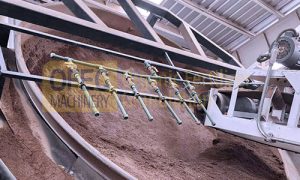
In the trend toward multi-variety, small-batch production, the convenience of formulation switching is crucial. The disc granulation line’s operating parameters – inclination angle (30°–55° adjustable), rotation speed (10–20 r/min), and spray rate – can all be rapidly adjusted. Operators need only adjust these variables to freely switch between multiple product types: pure organic fertilizer, organic-inorganic compound fertilizer, bio-organic fertilizer, and more.
Quantified technical parameters of formulation switching:
| Parameter | Disc Granulator Capability |
| Inclination adjustment range | 30°–55° (stepless) |
| Speed adjustment range | 10–20 r/min (stepless) |
| Inclination +5° → Speed +1–2 r/min | Coordinated adjustment maintains dynamic balance |
| Formulation switch response time | ≤30 minutes |
| Product types supported | Organic fertilizer, compound fertilizer, bio-organic fertilizer, etc. |
This flexibility means a single production line can serve multiple market segments simultaneously – producing high-potassium formulations for orchards, switching to high-nitrogen formulations for vegetables, and adjusting to premium small-package products for horticulture. For small to medium-scale enterprises needing to respond quickly to market demand changes, this represents a significant competitive advantage.
3. Pellet Size Controllability – Size as Needed
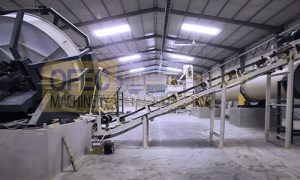
Pellet size directly affects product market positioning and price. The disc granulation line precisely controls particle diameter in the 2–8 mm range through coordinated disc inclination and speed adjustment.
Inclination angle vs. pellet size relationship:
| Inclination Angle | Retention Time | Pellet Size | Typical Application |
| 50°–55° | Short | Small (2–4 mm) | High-viscosity materials (fermented manure, compound fertilizer) |
| 40°–45° | Medium–Long | Medium–Large (4–8 mm) | Dry materials (straw powder blends, organic-inorganic mixes) |
Quantified technical parameters of size controllability:
| Parameter | Disc Granulator Capability |
| Pellet size range | 2–8 mm (continuously adjustable) |
| Pellet uniformity | ≥98% |
| Pelletization rate | ≥93% |
| Pellet shape | Spherical, smooth surface |
This size controllability means the same set of equipment can produce different product specifications, meeting the diverse needs of different crops, application methods, and customer segments. Furthermore, the ability to produce multiple pellet sizes within 2–8 mm allows operators to capture premium pricing – uniformly sized pellets command 15%–25% higher market prices than mixed-size granulated products.
Pellet formation mechanism: Powder materials in the disc, under centrifugal and frictional forces, exhibit particle size distribution and the “snowball effect,” enabling automatic classification. The disc achieves continuous “classification operation” – qualified pellets automatically overflow from the disc edge, while fine powder remains in the disc to continue growing. This automatic classification mechanism significantly reduces or eliminates the need for additional screening equipment, saving investment and floor space.
4. Energy Controllability – Savings are Profits
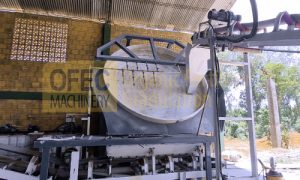
Compared to drum granulation, disc granulation offers lower power consumption. Industry data shows that at equivalent capacity, the disc granulation line can reduce energy consumption by over 20% compared to traditional granulation equipment. For long-term production projects, these energy differences translate directly into cost differences, impacting the project’s ROI timeline.
Quantified technical parameters of energy consumption:
| Parameter | Disc Granulator | Drum Granulator | Advantage |
| Main drive power | 3–15 kW (diameter dependent) | 15–55 kW | 30%–50% lower motor power |
| Single-unit footprint | 2–3 m² | 15–25 m² | 80%–90% less floor space |
| Annual energy cost saving | — | — | 20%+ lower than drum granulation |
Power matching reference table (2.0m disc granulator):
| Disc Diameter | Recommended Power | Speed Range | Key Consideration |
| 1.2–1.5m | 3–5.5 kW | 18–22 r/min | Upgrading to 7.5 kW increases energy 40% with no pelletization rate gain |
| 1.8–2.2m | 5.5–7.5 kW | 15–18 r/min | Underpowering reduces pelletization rate by 15%–20% |
| 2.5–3.0m | 11–15 kW | 12–15 r/min | Proper power ensures stable operation and consistent quality |
The power-pelletization rate correlation: The economic efficiency of disc granulator energy consumption hinges on finding the optimal match between motor power and pelletization rate.
Raw material-specific power adjustments:
- High-moisture, high-viscosity materials (35%–40% moisture): Require 10%–15% higher power to prevent disc bottom adhesion
- Low-viscosity, low-moisture materials (8%–10% moisture): Require lower power and speed; excessive speed causes pellet breakage
5. Production Capacity: Flexible Single-Unit Throughput
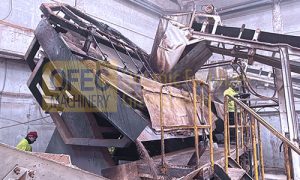
| Disc Diameter | Capacity Range | Recommended Application |
| 0.8 m | 0.1–0.3 t/h | Laboratory / R&D |
| 1.2 m | 0.3–1.0 t/h | Pilot production / Small farms |
| 1.5–2.0 m | 1.0–1.5 t/h | Commercial medium-scale plants |
| 2.5–3.6 m | 1.5–6.0 t/h | Large-scale continuous operations |
Parallel configuration advantage: Two disc granulators operating in parallel provide:
- Higher total throughput: Combined capacity of large single units
- Redundancy: Production can continue during maintenance of one unit
- Formula flexibility: Different units can run different formulations simultaneously
For projects targeting specific annual capacities, the following configuration guidelines apply:
- ≤30,000 t/y: Single disc granulator (1.5–3.0m diameter)
- 30,000–100,000 t/y: Two disc granulators in parallel (like 3.6m each)
- ≥100,000 t/y: Multiple disc granulators or single drum granulator