




1. Lowest Investment Threshold – Minimal Financial Pressure
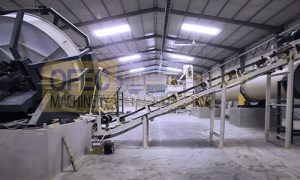
Among the three mainstream granulation processes, disc granulation requires the most affordable equipment investment. A single drum granulator typically costs between USD 20,000 and 35,000, and requires auxiliary equipment such as hot-air drying systems. In contrast, small disc granulators can be purchased for just a few hundred dollars, while large-scale units cost only a few thousand dollars. By comparison, disc granulators offer a relatively lower price point with simple installation and commissioning, resulting in a significantly smaller initial capital outlay. A disc granulator with a 1.5-meter diameter costs approximately USD 4,000 to 6,000, which is about 30% cheaper than an extrusion granulator. For startups and small-scale investors with limited budgets, this cost differential directly determines project feasibility and risk exposure.
Wear Parts and Maintenance Costs: The primary wear parts of a disc granulator are the scraper blades and the disc liner, both of which are inexpensive and easy to replace. The annual replacement cost for scraper blades is typically less than USD 280. Routine maintenance does not require specialized personnel, significantly reducing labor and maintenance overhead.
2. Broad Raw Material Adaptability – Lenient Pre-treatment Requirements
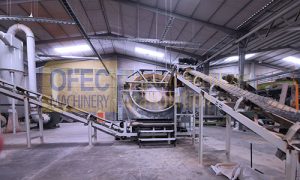
Wide Moisture Content Window: Disc granulation is a wet granulation process. The spray system raises material moisture content to 25%–35%, allowing the material to gradually roll and agglomerate into spherical pellets under the combined action of centrifugal force and friction generated by the rotating disc. This moisture window covers the discharge moisture range of most fermented organic fertilizers, enabling direct feeding without additional drying or moisture conditioning.
High Tolerance for Particle Size: Disc granulation imposes relatively lenient requirements on raw material pre-treatment, eliminating the need for excessive crushing. Coarse particles (2–3 mm in diameter) can be effectively agglomerated with appropriate power input to ensure adequate tumbling and sufficient binding. This broad particle size tolerance directly reduces equipment investment and energy consumption in the crushing stage.
Wide Range of Feedstock Compatibility: Disc granulators can process more than 20 types of organic raw materials, including livestock manure, straw powder, and sludge. Whether it is fermented livestock manure, straw powder, fungal residue, or supplementary conditioners and micronutrients, all can be fed directly into the granulator without complex pre-treatment.
3. Intuitive Operation – Precise and Controllable Process Parameters
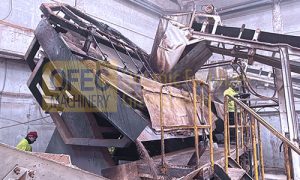
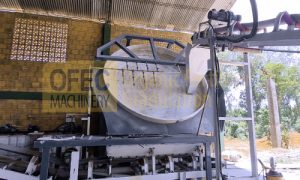
Unlike the enclosed drum of a drum granulator or the high-pressure system of an extrusion granulator, the disc granulator features an open-pan design that allows operators to observe the pellet formation process at any time. The core process parameters are simple and straightforward to adjust:
Inclination Angle Adjustment (35°–55°): The disc inclination angle is the key variable controlling pellet size. A smaller angle results in longer material retention time and larger pellets; a larger angle shortens retention time and produces smaller pellets. For example:
- High-viscosity materials (e.g., fermented manure): Use a larger inclination angle (50°–55°) to reduce retention time and prevent excessive agglomeration.
- Dry materials (e.g., straw powder blends): Use a smaller inclination angle (40°–45°) to extend retention time and promote pellet formation.
Rotation Speed Adjustment (10–18 r/min): Excessive speed causes centrifugal forces to throw pellets out prematurely, leading to breakage; insufficient speed results in inadequate rolling and uneven pellet growth. For a 2–3 meter diameter disc:
- Fine powders (particle size ≤1 mm): Higher speed (10–12 r/min) promotes frequent collisions for effective agglomeration.
- Coarse particles (particle size 2–3 mm): Lower speed (8–10 r/min) prevents excessive friction and breakage.
Coordinated Adjustment of Inclination and Speed: When the inclination angle is increased by 5°, the rotation speed should be increased by 1–2 r/min to maintain dynamic balance within the disc. For example, when processing high-moisture chicken manure, increasing the inclination from 50° to 55° requires raising the speed from 10 r/min to 12 r/min to prevent material from accumulating at the bottom and forming large lumps. This “what-you-see-is-what-you-get” operating mode enables timely detection and correction of anomalies, significantly reducing quality fluctuations caused by operational errors.
4. High Pelletization Rate – Excellent Pellet Quality
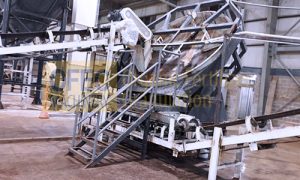
The disc granulation line employs a “snowball” agglomeration principle, where materials continuously roll and agglomerate under the synergistic effects of centrifugal force, friction, and gravity. The disc features an integral arc structure design, achieving a pelletization rate of over 93%. Pellet diameter is flexibly adjustable within the 2–8 mm range, with a uniformity rate of up to 98%. The resulting pellets are spherical, smooth, and visually appealing, offering clear market advantages in terms of commercial appearance.
By comparison, the drum granulator achieves a relatively stable pelletization rate of 40%-60%, making the disc granulator significantly superior in this key performance indicator. Additionally, the disc is equipped with three discharge ports, facilitating intermittent production and effectively reducing labor intensity.
5. Energy Consumption Analysis – Power Matching Determines Cost Efficiency
Energy consumption in disc granulation is primarily concentrated on the disc rotation drive, resulting in relatively low overall energy usage. However, compared to drum and extrusion granulators, disc granulation is a wet process that requires subsequent drying at 80–120°C to reduce moisture content below 15% for storage. The drying stage accounts for 60%–70% of total energy consumption.
Optimal Power-to-Pelletization Rate Matching: The economic efficiency of disc granulator energy consumption hinges on finding the optimal match between motor power and pelletization rate. Using a 2.0-meter disc granulator as a reference:
| Disc Diameter | Motor Power | Speed Range | Key Consideration |
| 1.2–2 m (Small) | 3–5.5 kW | 18–22 r/min | Upgrading to 7.5 kW increases energy consumption by 40% with no significant improvement in pelletization rate |
| 2–3m (Medium) | 5.5–11 kW | 15–18 r/min | Insufficient power causes unstable disc speed, reducing pelletization rate by 15%–20% |
| 3.0–3.6 m (Large) | 11–15 kW | 12–15 r/min | Proper power ensures stable operation and consistent pellet quality |
Impact of Raw Material Characteristics on Power Requirements:
- High-moisture, high-viscosity materials (e.g., fermented chicken manure at 35%–40% moisture): Require 10%–15% higher power to increase rotational speed and prevent material from sticking to the disc bottom. Insufficient power leads to material accumulation and lump formation, with pelletization rates dropping below 60%.
- Low-viscosity, low-moisture materials (e.g., compound fertilizer dry powder at 8%–10% moisture): Require lower power and lower speed; excessive speed causes pellet breakage.
Economic Evaluation: Using a medium-scale fertilizer plant (daily capacity of 100 tons) as an example, a 11 kW motor, despite higher per-ton energy consumption compared to 7.5 kW, improves pelletization rate by 17%, generating approximately USD 134,000 more in annual net profit compared to underpowered configurations. The optimal match between power and pelletization rate directly determines overall plant profitability.