




Mixer
The OFEC Mixer is the key mixing equipment in organic fertilizer production lines, designed to uniformly blend fermented organic materials, conditioners, and micronutrients according to formulation ratios. We offer two models – the twin-shaft mixer and the disc mixer – suitable for continuous large-scale production and intermittent small-batch production respectively, meeting the mixing needs of organic fertilizer projects of all scales.
Product Overview
OFEC provides two types of mixers – the twin-shaft mixer and the disc mixer – tailored to different production scales, material characteristics, and process requirements.
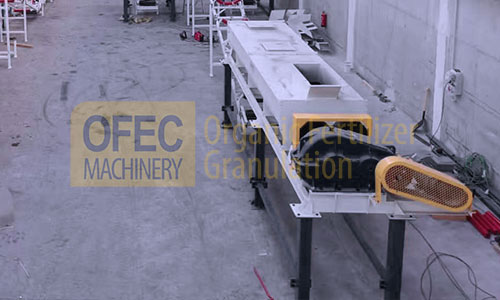
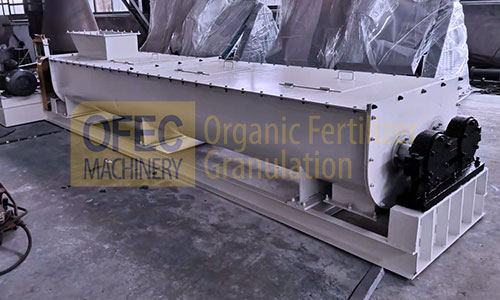
Twin-Shaft Horizontal Mixer
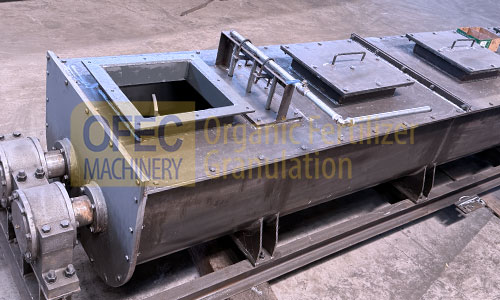
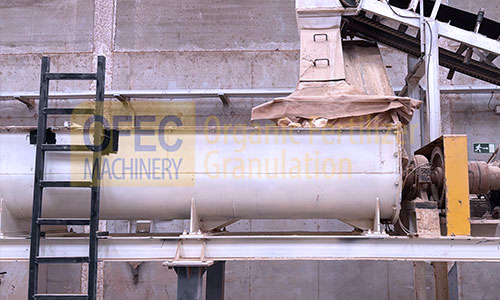
The twin-shaft horizontal mixer features a dual-shaft design, with two parallel mixing shafts rotating synchronously in opposite directions to achieve efficient, uniform mixing. This model is particularly suitable for continuous large-scale organic fertilizer production, offering high mixing uniformity and efficiency.
It mainly consists of the following components:
A – Mounting Base: Supports the entire equipment
B – Housing: Welded from steel plates and sections, with a tight seal
C – Feed Inlet: Entry point for materials
D – Discharge Outlet: Discharges mixed materials
E – Inspection Door: Allows checking of equipment operation status
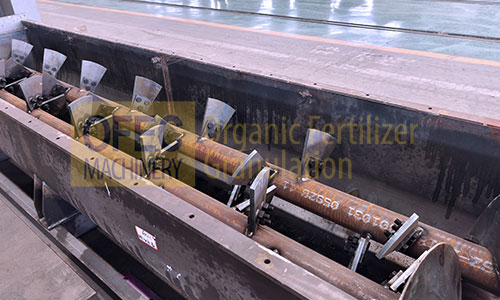
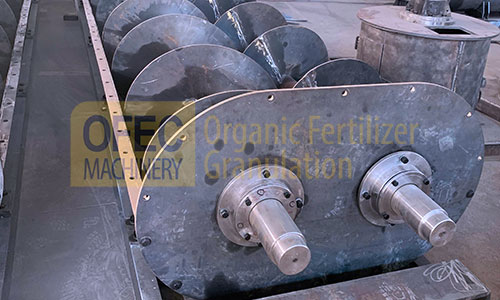
F – Mixing Assembly: Core working component, including left- and right-hand screw shafts and blades
G – Drive Gear: Transmits power
H – Pulley: Drive component
I – Motor: Power source
J – Reducer: Reduces speed, increases torque
K – Guard Cover: Safety protection
- Mounting Base: Supports the entire equipment
- Housing: Welded from steel plates and sections, with a tight seal
- Feed Inlet: Entry point for materials
- Discharge Outlet: Discharges mixed materials
- Inspection Door: Allows checking of equipment operation status
- Mixing Assembly: Core working component, including left- and right-hand screw shafts and blades
- Drive Gear: Transmits power
- Pulley: Drive component
- Motor: Power source
- Reducer: Reduces speed, increases torque
- Guard Cover: Safety protection
Working Principle
The motor drives two parallel mixing shafts to rotate synchronously in opposite directions through the reducer. Specially designed mixing blades are mounted on the shafts. After material enters the housing through the feed inlet, the counter-rotation of the shafts and the pushing action of the blades create intense convection, shearing, and diffusion movements within the housing – achieving uniform mixing in a short period of time.
The blades are made of wear-resistant, non-stick materials. The blade structure is reasonably designed and simple, making replacement easy after wear and ensuring a long service life.
Features and Benefits
High Mixing Uniformity
Tight Seal
Wear-Resistant, Non-Stick Blades
Compact Structure
Continuous Operation
Twin-Shaft Mixer vs. Disc Mixer
Comparison Aspect | Twin-Shaft Mixer | Disc Mixer |
Structure | Horizontal twin-shaft | Vertical disc |
Production Mode | Continuous | Intermittent (batch) |
Applicable Scale | Large-scale continuous production | Small-batch, frequent formula changeover |
Mixing Efficiency | High, fast | Moderate, adjustable cycle |
Cleaning & Changeover | More complex | Fast and convenient |
Processing Capacity | 1–20 t/h | 0.5–6 t/h |
Application Scope | Large organic fertilizer plants | Small to medium plants, laboratories, multi-product production |
Footprint | Moderate | Smaller |
Comparison Aspect
Disc Mixer
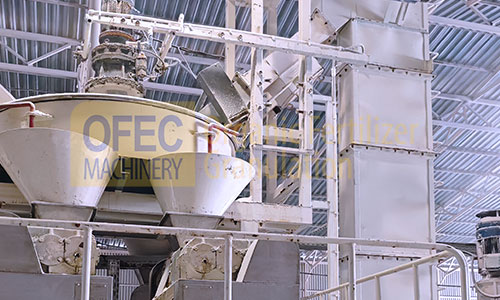
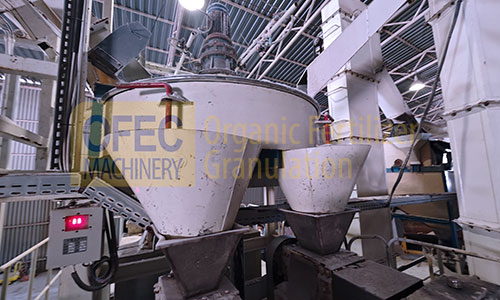
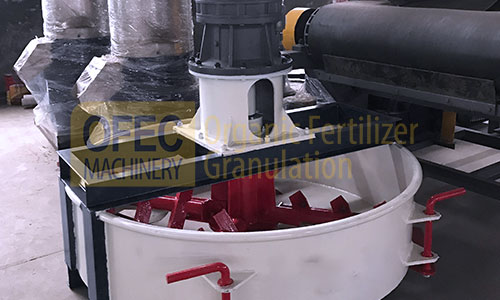
The disc mixer features a vertical disc structure, using a rotating mixing disc and mixing arms to thoroughly blend materials. This model is particularly suitable for intermittent small-batch production and projects requiring frequent formula changes.
It mainly consists of the following components:
● A – Frame: Supports the entire equipment
● B – Mixing Disc: Core working component where mixing takes place
● C – Mixing Arms: Equipped with mixing blades for shearing and tumbling
● D – Motor: Power source
● E – Reducer: Reduces speed, increases torque
● Frame: Supports the entire equipment
● Mixing Disc: Core working component where mixing takes place
● Mixing Arms: Equipped with mixing blades for shearing and tumbling
● Motor: Power source
● Reducer: Reduces speed, increases torque
Working Principle
Material is fed into the disc-shaped mixing vessel through the feed inlet. The motor drives the mixing disc and mixing arms to rotate – the disc carries material in circular motion while the arms shear and tumble the material, creating multi-dimensional mixing movements that achieve uniform blending in a short period of time.
The discharge outlet is located at the bottom of the disc. After mixing is complete, opening the outlet allows rapid discharge. The disc structure makes cleaning and formula changeover very convenient, suitable for multi-product, multi-formula production scenarios.
Features and Benefits
Uniform Mixing
Rapid Discharge
Easy Changeover
Flexible Operation
Strong Adaptability
Simple Structure
Industry Solution for Organic Fertilizer Mixer
Mixing is a critical step in organic fertilizer production that ensures product uniformity. Proper mixing processes directly affect subsequent granulation results and final product quality.
Typical Process Flow
Fermented organic materials → Crushing → Mixing → Granulation → Drying → Cooling → Screening → Packaging
Solution Advantages
● Efficient mixing ensures consistent uniformity across every batch, guaranteeing product quality
● Optimized mixing structure for organic material characteristics prevents material buildup and sticking
● Sealed design prevents dust leakage, improving the production environment
● Adaptable to multiple formulations, meeting the production needs of different organic fertilizer products
● Twin-shaft and disc models available for flexible selection based on different scales and process requirements
Resources
In Organic Fertilizer Production, If This “Mixing Stage” Falls Short, Everything Else is Just “Good Enough”
On an organic fertilizer production line, the granulator is the