




Rotary Dryer
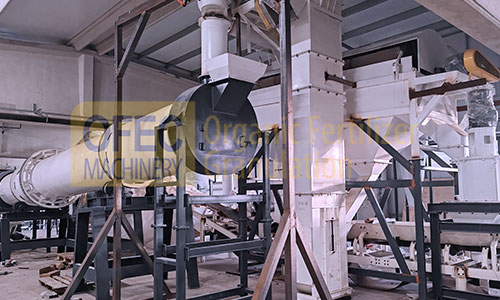
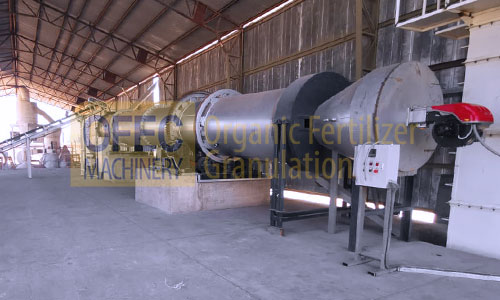
The OFEC Rotary Dryer is the key drying equipment in organic fertilizer production lines, designed to reduce the moisture content of granules after granulation to safe storage levels. With drum diameters from 0.8 to 3.6 meters and capacities from 1 to 200 TPH, it features customizable lifting flights and supports multiple fuel options including oil, natural gas, coal, and biomass.
Product Overview
In organic fertilizer production, granules exiting the granulator typically contain 15%–30% moisture or higher, and must be dried to meet storage, packaging, and transport requirements.
Equipment Components
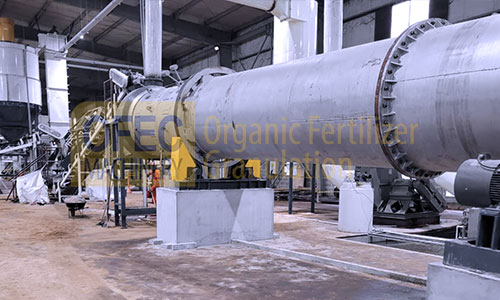
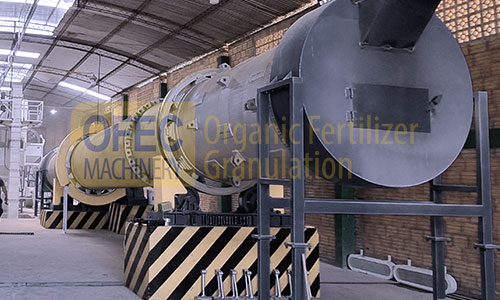
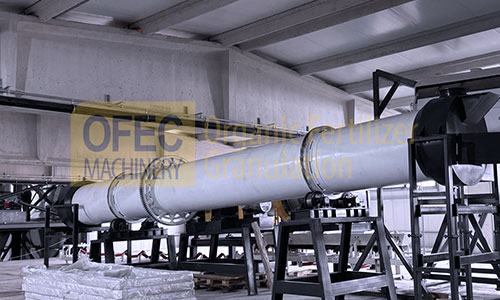
A – Cylinder (Drum): The core working part where drying takes place
B – Feeding Device: Feeds wet material into the drum
C – Discharging Device: Discharges dried material
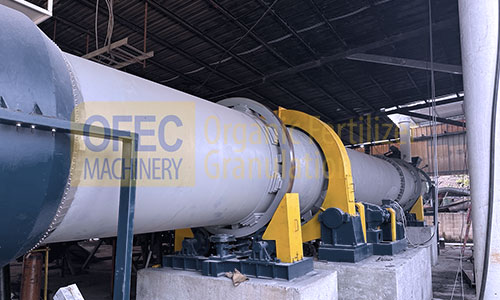
D – Support Wheel Assembly: Supports the rotating drum
E – Transmission: Drives the drum rotation
F – Protecting Cover: Safety protection
G – Rolling Ring (Tyre): Works with support wheels to support the drum
H – Big Gear: Drive component
I – Pinion: Drive component
J – Exhaust Gas Outlet: Discharges moist exhaust gas
K – Hammering Device: Prevents material buildup
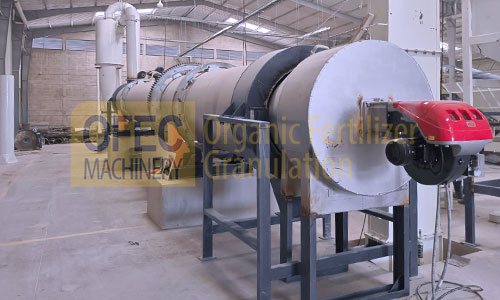
L -Hot-Blast Stove: Provides heat source
M – Burner: Burns fuel
Cylinder (Drum): The core working part where drying takes place
Feeding Device: Feeds wet material into the drum
Discharging Device: Discharges dried material
Support Wheel Assembly: Supports the rotating drum
Transmission: Drives the drum rotation
Protecting Cover: Safety protection
Rolling Ring (Tyre): Works with support wheels to support the drum
Big Gear: Drive component
Pinion: Drive component
Exhaust Gas Outlet: Discharges moist exhaust gas
Hammering Device: Prevents material buildup
Hot-Blast Stove: Provides heat source
Burner: Burns fuel
Working Principle
Wet organic fertilizer granules enter the feed end and, as the drum rotates, are lifted by internal flights and showered through a stream of hot gas, forming a falling “curtain” that maximizes heat and mass transfer efficiency. Hot air comes into full contact with the material, evaporating moisture and achieving the desired drying effect.
When processing organic fertilizer pellets, the tumbling action generated by the dryer further rounds and polishes the granules, enhancing the appearance and market value of the final product.
Features and Benefits
High Throughput
High Thermal Efficiency
Flexible Fuel Options
Rugged Construction
Efficient Sealing
Custom Design
Granule Polishing
Stable Operation
Industry Solution for Organic Fertilizer Drying
Drying is a critical step in the organic fertilizer production line. Proper drying not only ensures product stability but also enhances granule strength and appearance.
Typical Process Flow
Organic fertilizer granulation → Rotary drying → Cooling → Screening → Coating (optional) → Packaging
Solution Advantages
● Customized flight design based on organic material characteristics (stickiness, moisture content, heat sensitivity)
● Precise inlet temperature control (150–400°C, material-dependent), maximizing evaporation while preventing thermal damage to the product
● Retention time adjustable from 10 to 40 minutes through speed and inclination control
● Co-current or counter-current airflow options based on material properties
● Compact structure suitable for new plants or retrofitting existing lines
Resources
The “Last Line of Defense” After Drying – How Many Organic Fertilizer Plants Are Overlooking It?
On an organic fertilizer production line, the dryer is the